
Heard this piece titled "Note to Sixth-grade Self" on our local NPR today, in a program called Re:sound.
While driving to a store, I flipped on the radio, and heard an audio rendition of Julie Orringer's "Note To Sixth Grade Self." I was mesmerized by the story of the social outcast, and her everyday struggles with her mean classmates. Even after reaching the store, I waited in the car in the parking lot until the reading ended.
Upon searching the Web, I learned that it had been published in The Paris Review. I liked the piece so much that I am now thinking of getting her book "How To Breathe Underwater."
If this link works, you can hear it in MP3.
Saturday, February 18, 2006


Cinderella Man
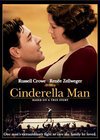 This is not a documentary in the truest sense. This movie is a biography based on the life story of boxer Jim Braddock. This common-man-turned-hero movie is definitely worth watching, esp. on DVD. I was surprised to note that it is currently ranked #207 in IMDB's all-time Top 250 movies list.
Possible Spoiler Alert (Don't read further if like to watch movies knowing as little about them as possible.)
I saw this movie a few months ago, but two scenes stick out in my memory. The first is the one where Russell Crowe pretends to his little daughter that he had a dream about having a full meal, and uses that ruse to give his breakfast to her and leaves for physical work hungry.

The other scene is the one where he goes back to the club and holds out his hat and asks for a hand-out while his erswhile boxing patrons (who made a lot of money on him) are eating and drinking.
If this movie passed you by, seek out the DVD.
Boxing Russell Crowe Cinderella Man
Wednesday, February 15, 2006
Po Bronson - Live at Chicago
 Continuing from my previous post on the same experience. (First post)
Po's message was that things are overall quite okay. He pointed out that we have gotten into this habit of "aggrandization of the Present."
He referred to the 4 existential fears of Kafka that might be paralyzing us. The Fear of dying, the Fear of choosing, the Fear that we will end lonely and finally, the Fear That life is ultimately meaningless.
To hear Po quote Kafka, in that hushed voice of his was quite a memorable experience in itself.
He would leaven all this seriousness by bringing in humor. He read aloud a review that showed up in Amazon, where the reviewer even claimed that Pierce Brosnan was Po's "superior brother."
- You do not need to leave your room. Remain sitting at your table and listen. Do not even listen, simply wait, be quiet, still and solitary. The world will freely offer itself to you to be unmasked, it has no choice, it will roll in ecstasy at your feet.
Po spent a few minutes stressing that family life around the world has actually improved. He quoted lots of stats comparing contemporary numbers with past decades/centuries. Those who are interested should surely check out the factbook that he has compiled.
When Po read from his book, he had the entire audience captivated, hanging on to his every word. The interesting thing for me is that I had read the book before, knew the twists and surprises in every story, and still. To hear Po narrate the stories was a uniquely moving experience. There were lots of misty eyes in the audience, and these included the men listening.
During the Q&A session, I asked him what his next project was. His reply was that he honestly didn't know what it was going to be.
Whatever it turns out to be, I am just happy to wait and be surprised.

Saturday, February 11, 2006
Po Bronson - Book Signing Experience
 In person, Po looks exactly like the photo in his book. Around 50 people had showed up that evening for the book signing in Chicago's Transitions Bookplace. He appeared a tad bit diffident hanging around before it was time for him to go on stage.
[Spoiler Alert: If any of you are planning on or think you'll have a chance to go to a live book signing for "Why Do I Love These People?" I recommend that you skip reading what follows and enjoy the whole experience afresh as it unfolds.]
Po had with him an assortment of "artefacts" -- maps and photos and a 3-ring binder that he'd brought along with him. He started out by reading aloud his "Promises to a Newborn Son." The letter was actually his clever way of informing us a little about Po's own childhood, the things that had been done to him (or had been left undone) -- a litany of parenting lapses that he experienced growing up. The list was hilarious to hear for the audience, but it couldn't have been fun for Po as he was growing up.
 He showed a color-photo of Nicole Kidman reading his "What Should I Do" book in the movie "Bewitched" and he pointed out the irony of someone going to Hollywood to learn what real life is like (which is in the movie's plotline). Po also mentioned that he'd not been consulted or aware that his book was being used as a prop in the movie. (He then shared a couple of stories about his experience of being a writer in Hollywood.)
Next, he unfolded a large white map of the United States, with all the states outlined. In that map, Po had marked all the cities wherein he'd spent days and weeks interviewing 100s of people and had marked all the routes for the trips he had taken criss-crossing the country. One look at his map and it becomes readily evident that any author attempting a such book of inteviews and stories has to spend tons of time and effort.
As the stories kept coming, Po grew more and more comfortable and got deeper into his subject. What I had mistaken for diffidence was probably just his nature. Clearly, he was in his element. connecting with the audience in the bookstore at many levels, keeping them laughing while also making them think about the more serious subject at hand -- the one of family relatioships.
He made one very key point, which I had not thought about until that moment. He pointed out the distinction between his two recent book. "Getting what you love is the subject of 'What should I do', whereas loving what you get is what this new book, 'Why do I love these people' is about," he said.
For this post, I think I will stop here, and continue in my next.
Categories: Po Bronson Author Book Signing
Friday, February 10, 2006
Po Bronson Live
 Listening to Po Bronson talk about his Book
Transitions BookPlace, Chicago IL
First, a very brief introduction. In case you are not very familiar with this author, Po Bronson, it was his 3rd book "Nudist on the Late shift" a great collection of pieces in the height of the dot-com days that really brought him to the attention of the internet literati. (It was also the first Po Bronson book that I read.) His website is well worth checking out.
His next book, What Should I Do With My Life was a departure of sorts from his earlier style. In that book, he delves into the question of the book's title with a disarming frankness. The tone is very different from that of the Silicon-valley-dot-com-craze-fanning "Nudist" book. I got the "What Should I Do" book because I had loved Po's literary style in Nudist, (plus the title What Should I Do is rather compelling) but I read the book because of the power of the stories in them.
He's followed up this book with his latest book, Why Do I Love These People?, similar in vein to the What Should I Do book. I read "Why Do I Love" in the Fall of 2005, and was lucky enough to learn that Po would be reading and presenting live in Chicago in January of 2006. I will post about the experience of listening to Po share his stories in my next posts.
Tuesday, February 07, 2006
Jaideep's List: Most Enjoyed In 2005
 This is a guest entry. For many years now, an ex-colleague of mine, Jaideep, has been sharing his Most Enjoyed lists with me. I especially look forward to his musical recommendations, mainly because he is musically inclined. Here is his list for 2005, published with his permission.
Music
Hi Ram,
Here's my most enjoyed list for 2005 (order has no meaning).

Sao Vicente de Longe - Cesaria Evora
You have stolen my heart (Churalia) Music of RD Burman - Asha Bhosle and the Kronos Quartet
Moffou - Salif Keita
Music DVDs
Live in London - Youssou N'dour
Live in Paris - Cesaria Evora
Sade Live
Live 8
Concerts
Festival of India - Ravi and Anoushka Shankar
Habib Koite and Bamada
Books - Fiction
Transplanted Man - Sanjay Nigam
Hero's Walk - Anita Rau Badami
Hungry Tide - Amitav Ghosh
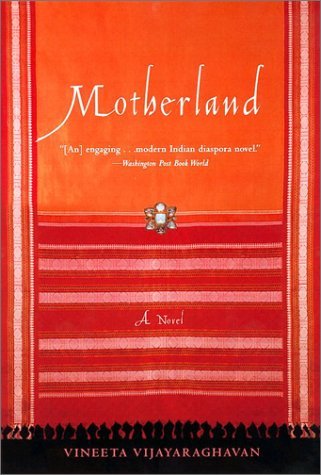
Motherland - Vineeta Vijayaraghavan
Goddess for Hire - Sonia Singh
The Guru of Love - Samrat Upadhyay
Da Vinci Code - Dan Brown
Books - Non Fiction
World is Flat - Thomas Friedman

 Movies
The Tracker
Murder on a Sunday Morning
Star Wars III
Trips
Montreal and Quebec City
Florida Keys
Restaurants
Indian Grill - Lincoln Park, Chicago
Paris Bordeaux (Crepes) - Lakeview, Chicago
Chu Chai (Vegetarian Thai) - Montreal
Ciao
Jaideep
Friday, February 03, 2006
Travel Story: The Iraqi Sheik and the Taxi Driver
I have thought about this story a few times since I heard it, and decided to share it here even though it is almost certainly apocryphal.
Due to last minute travel plan changes, we ended up in Amman airport in Jordan this past Christmas eve. (Well, it was past midnight, so it was technically Christmas Day.) We hopped on to the airport bus at 2am and got dropped at Abdali bus station close to 3am.
The pouring rain practically forced us to get on a taxi, and the driver wanted to take us to a hotel where he could get a few Jordanian Dinars (JDs) as commission for his effort. This is the story that the taxi-driver told us, speaking English with a middle-eastern accent, while driving us to our hotel.
Due to last minute travel plan changes, we ended up in Amman airport in Jordan this past Christmas eve. (Well, it was past midnight, so it was technically Christmas Day.) We hopped on to the airport bus at 2am and got dropped at Abdali bus station close to 3am.
The pouring rain practically forced us to get on a taxi, and the driver wanted to take us to a hotel where he could get a few Jordanian Dinars (JDs) as commission for his effort. This is the story that the taxi-driver told us, speaking English with a middle-eastern accent, while driving us to our hotel.
Our taxi driver had a friend who was also a taxi driver. Two months earlier, this other taxi driver had picked up an Iraqi sheik with a huge suitcase as a customer. (Ever since the fall of Saddam's regime, several Iraqis have been crossing the border into Jordan, a country that is relatively peaceful in this tumultuous region.) This Sheik directed the taxi driver to take him to any really good hotel, the price didn't matter. Before the sheik got off, he asked for the taxi driver's cellphone number.That's the story our cab driver told us, while taking us to a hotel. Amman is a neighboring city to Iraq, and it's possible that some people in Iraq might have access to money that probably wasn't theirs. It was very late at night, I was jet-lagged and so it was easy to believe that there was some truth to the story. May be the sheik had an urge to show off to the taxi-driver, or may be the taxi driver just made the whole story up.
The next day the sheik called the taxi driver, and directed him to take him to a different hotel where he could check in. Then, the same thing happened the following day -- the sheik with his big suitcase moved to yet another hotel. This went of for 5 days, the sheik switched hotels every single day.
Finally, it was time for the sheik to leave Amman. He summoned the taxi driver to pick him up from his hotel. "Do you know what's in my suitcase?" the sheik asked the cab-driver just as he was getting off the cab. The driver, of course, didn't. The sheik then told him that he had over 2 million U.S. dollars cash in it and left, hefting the mammoth suitcase.
Monday, January 30, 2006
Film: War Photographer

"If your pictures aren't good enough, you aren't close enough." -- Robert Napa
I posted earlier about the movie "Born Into Brothels" here. In response to that, someone recommened the movie "War Photographer." Coincidentally,
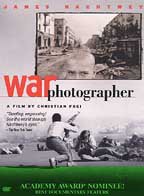 around the same time I saw the trailer for War Photographer in another DVD and so I got hold of the movie right away. (I have been focusing mainly on documentaries this year, and I expect that I will posting about more documentaries in the coming months.)
The protagonist, photojournalist James Nachtwey is a very intriguing character, and his inner strength comes through. (You can certainly make the case that this is a "zen" movie, in its own way.) For two years, Christian Frei followed Jim with a micro-cam, recording the photographer traveling all over the world, in Kosovo, in Gaza and in Indonesia.
The adjective I can readily apply to this one is "powerful." War Photographer is a powerful movie, and exactly the kind of movie that all of us must see because it is so easy to forget (or not even know) that such things are going on in the world. It brings home more vividly the events that we skim past in newspapers in our hurry to get to the sports and cartoons sections.
Below are three of Nachtwey's photos that resonated with me the most.
 As the vanquished Hutus fled into Tanzania, they had to leave at the border the weapons with which they had committed genocide.
(I found this photo more telling than any of maimed bodies)
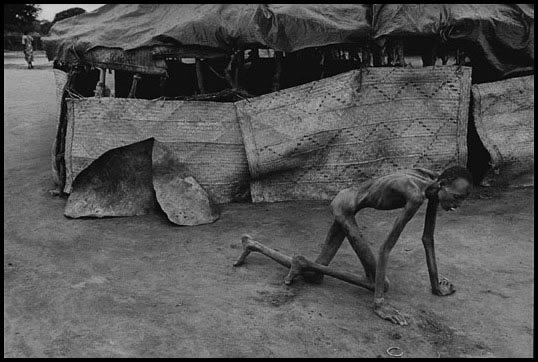
Sudan, 1993 - Famine victim in a feeding center. Nachtwey's focus on poverty and famine is as compelling as his work on war and genocide. (The famine and lack of food has withered their bodies to mere skeletons and Jim reminds us that these people are actually in the feeding centers being helped.)
 A lot of viewers are sure to like the positive aspects in the tragic story of Sumarno, an Indonesian father, who lost an arm and a leg when a train ran over him. His whole family continues to live in between two actively used railways tracks, with Sumarno is doing his best to take care of his family.
Jim's credo really cause me to pause and reflect. Don't miss his website, and if an exhibition of his work comes to your town, absolutely don't miss it.
Nachtwey's Credo: The worst thing is to feel that as a photographer I am benefiting from someone else's tragedy. This idea haunts me. It is something I have to reckon with every day because I know that if I ever allow genuine compassion to be overtaken by personal ambition I will have sold my soul. (Read Full credo)
Category: Documentary, Oscar nominee, Photography
Tuesday, January 24, 2006
A Song By Yesudas -- Patchai Kiligal (Tamil)
 (This post is meant as a nod to those who enjoy songs from Indian films. If songs in Indian regional languages are not for you, just scroll down to the next post.)
I was on a trans-Atlantic flight this past December, flipping through the audio channels. In a channel titled "Rhythms of World" I was jolted out of the stupor that long flights induce, because the song that had just started was in Tamil, my native language. (This was a US carrier, and we weren't even flying to Asia.) I had never heard the song before, and it was an incredibly melodious one. I pulled open the audio guide and saw that the song was "Patchai Kiligal" (Green parrots) by K J Yesudas. The word "Indian" was in parenthesis. Partly because of stumbling upon it so unexpectedly, I found everything about the song applealing. The
 melody, the unintrusive music and certainly the lyrics. (Does anyone know where to find the English translation for the lyrics?)
Much later, I learned that the song was actually from a movie -- "Indian" and that AR Rahman was the music director.
If this link works, you can listen to it here, by selecting the song.
Sunday, January 22, 2006
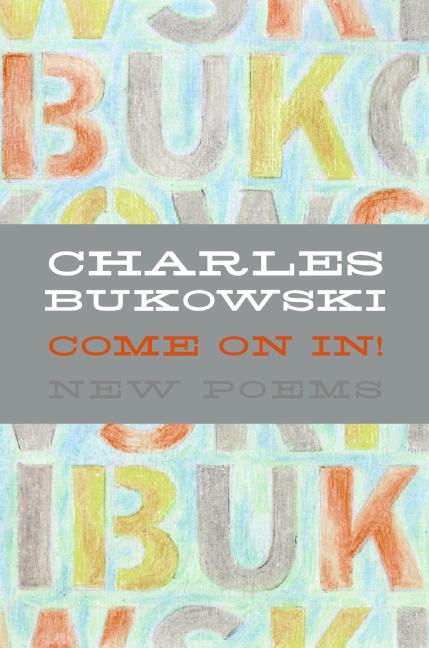
Charles Bukowski -- Come on in!
 I think good poetry should startle, shatter and,
yes, entertain while getting as close to the truth as
possible.
I can get all the comfort I need from a good
cigar.
from on the sunny banks of the university
Charles Bukowski, taking a jab at those teaching English Lit whose writing is getting ever more "comfortable."
I hope I don't lose any readers by including Bukowski in my "most enjoyed" list. But the truth is that I really like the earthiness in his poems, and I would not be true to myself if I left him out because (quite) a few people are offended by him.
I am no poetry buff. To illustrate: Two weeks ago, I borrowed a book from my library with a title that was something like "The Best American Poetry of 2005," and I had to return it unread because even though I looked and looked and I couldn't find a single poem that I understood.
Like I said I am really not much of a poetry kind of guy. I read maybe 1 or 2 books of poetry a year. Though not a hardcore Bukowski addict, whenever I see a new book by Bukowski, I usually pick it up. The guy died in 1994, and so I am always excited to be reading new poems by him in 2006.
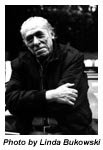 Charles Bukowski, for those who haven't read him or heard of him (and I really think everyone should read at least one book of his and decide for themselves if they like him or not) has the reputation as the Big Bad Boy of Poetry. And many will say the reputation is well deserved. (Bukowski is to poetry what George Carlin is to stand-up.) There is also the widely held belief that his poems are misogynistic, and perhaps even misanthropic. I will leave all those labels and discussions to the erudite Lit critics.
I basically like him mainly because his poems are so readable! I love his no-pretensions no-gimmicks approach (though that might in itself be one neat gimmick.) I am drawn to his topics -- hard-living, hard drinking, all sorts of women, horse racing and gambling -- because they are a world removed from my own rather subdued, suburban life. There is a lot of humor in his poems, and I enjoy the way he uses the device of self-reference in so many of his poems.
I love the way he demystifies poems and his irreverence towards other poets and critics.
from
I have continued regardless
[...]
let them all rail:
if it wasn't me,
it would just be someone
else.
these gossips and complainers,
what have they accomplished
anyway?
never having risen
they
can neither
slip nor
fall.
And I especially love the fact that his poems (all of them without exception) are so wholesome. They have great endings and there is a sense of completeness to each poem, which is such a rarity in today's poems.
That he really cares about poems comes through in many of his poems about poems.
from
a note upon modern poesy
[...]
poetry is still moving slowly forward, I guess.
and when your average garage mechanics
start bringing books of poesy to read
on their lunch breaks
then we'll know for sure we're moving in
the right
direction
[...]
Until I did some research I hadn't realized that there were so many books about Bukowski. May be I will get the time to read some of them, someday. Perhaps someone reading this knows if Bukowski edited his poems. He probably did, and I must be naive to imagine that poems just flowed out of his pen -- wonderful and whole -- every few minutes. That's way it seems to me whenever I read him.
If you are new to Bukowski, check out "Come On In" or any of his other books of poems. And do let me know whether or not you liked them by leaving a comment here.
I can't think of another poet who makes people as
angry as I do.
I enjoy it
from the x-bum
Category: Books, Poetry. Links: Bukowski: Born into This;orange county register
Friday, January 20, 2006
Movie: Born into Brothels
 Movie: Born into Brothels
I imagine that having the word 'brothel' in a title will elicit one of two reactions. Some will be intrigued and will therefore seek out the movie. Others will decide that it is not "family friendly" or G-rated, and might choose to skip it.
To all those in the latter category, I urge that they reconsider. By skipping this documentary because of a mere word, you will be missing out of something important and essential. I am even willing to go as far as dubbing this as "seminal", for those of us who have any ties with India. In this movie, the brothels serve mainly to provide a background, the mileu for the stories and lives of these lively children.
After watching the movie, I couldn't think of any group of people that won't like the movie. But when I browsed the Web for reactions, I did find critics and they had two main objections.
Quite a few people felt that the movie/documentary, which rotates through the stories of 8-10 children, doesn't allow us to get close to any of them. I understand the objection, but feel that this arrangement might be by design. This is not a story with that plotline. It is more about how the photography classes (which is something so outside of norm for these kids) enters and impacts these young lives.
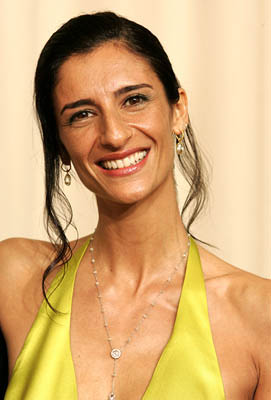
The other objection was that this movie was more of a self-promotion by the photographer/teacher, Zana Brisky. I cannot really side with this objection. While the rest of us are living lives of luxury (reading, writing and commenting on blogs) Ms. Brisky went off to live in Calcutta and chose to spend her time making the world aware of female infanticide. That fact alone should give her the license to tell her stories in any way she wishes to.
If you haven't already seen the movie, you will almost surely see it in DVD. After watching the movie, absolutely don't miss the part (in the extras section of the DVD) where we get to see the reactions of these same kids getting to see the movie in which they are featured for the very first time. Three years have elapsed since the original footage was shot, and we can visibly see that the kids have grown up a bit. Their reactions (laughter and sadness) are honest and I found this segment quite amazing. Again, don't miss this part in the DVD.
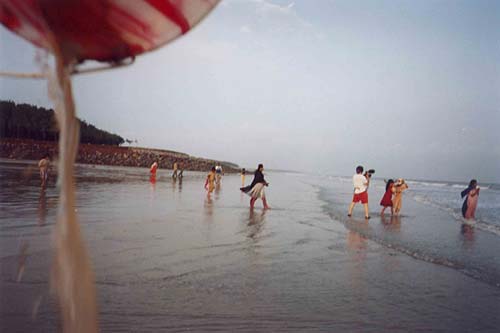 Born Into Brothels was lucky, in that got nominated and went on to win an Oscar for Best Documentary, and consequently got worldwide publicity. That was the main reason I got to hear about it and ended up watching it. What I feel bad about is that there must be so many more wonderful documentaries out there, that don't get nominated, and don't get the publicity and so we all end up missing them. If you know of other documentaries that you'd like to recommend, please leave a comment for the other visitors.
(If you wish to recommend this movie to someone, you can use the "letter" icon below to forward this post to them via email.)
Sunday, January 15, 2006
Two Quick Quotes on Philanthropy
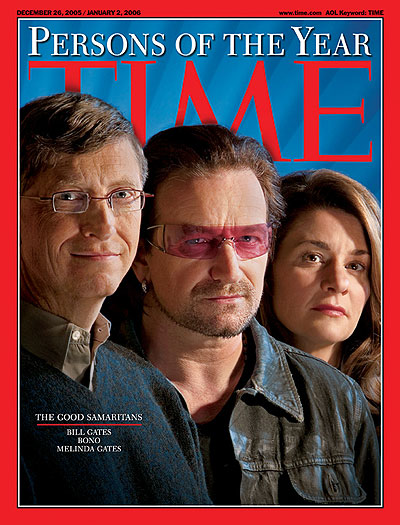 A couple of quick quotes that I found and liked in the December 26, 2005 issue of Time, in which they named Bill and Melinda Gates and Bono as the PERSONS OF THE YEAR.
The man who dies rich dies disgraced -- ANDREW CARNEGIE
"From those to whom much is given, much is expected" -- Mary Gates (Bill Gates' mother) in a letter to her then future daughter-in-law Melinda Gates.
Saturday, January 14, 2006
Beautiful Minds: Capture the spirit of Nobel achievement
 British Library -- Temporary Exhibit
One day last week, I found myself in London with nothing to do on a late afternoon. Armed with an all-day Underground pass, I was looking for some place to get to. It was cold, and it was too late to get into any museums. I had left my gloves back in Chicago (foolishness, rather than hardiness) and so I couldn't wander the cold streets for too long.
Then, in a map of Central London that I'd picked up at the Heathrow Underground station, I noticed the British Library marked next to King's Cross station.
Being a big fan of libraries everywhere, I decided to check out the library and see their collection of books. As it turned out, I never got to see their rooms of books. They wanted me to apply for a "reader pass" and then I was told that it was too late in the evening to get one that day.
But I was in for a very pleasant surprise. The library had many
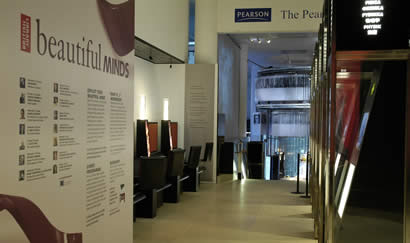 special exhibits and to me, those were fascinating. In the John Ritblat Gallery they're showcasing the "Treasures of the British Library." The features of this room include the actual notebooks and manuscripts used by Da Vinci, Newton, Mozart's and Beethoven's musical notations, as well as some of the notebooks used by the Beatles.
I was fortunate in that there was a special exhibition on Nobel laureates on display at the time I visited. I spent over 2 hours on just that one. The overall topic was whether or not the "mileu" (the place where the Nobel laureates worked) had a huge influence on their creativity. (For example, why does Cambridge produce so many more Nobel laureates than Oxford?)
There is a room where they are showing 7 documentaries,
 running continuous ly, projected on 3 large screens. To me, these were the highlight of the exhibition and I recommend those films highly. It was especially great to watch the one on Tagore's Shantiniketan. (I believe those documentaries were made by an organization called NobelMuseet.) There were tons of sound recordings by the Nobel winners, but I was short of time.
(It was interesting to listen to Hemingway stiffly apologizing to the people of Scandinavia on being unable to come in person to accept his award due to his bad health.)
Anyway, if any of you reading this live in or near London, I recommend dropping and checking it out. (The special exhibition runs until March 15th, 2006.)
Category: Museums/Libraries
Thursday, December 22, 2005
Most Enjoyed software -- iTunes

 iTunes
I don't own an iPod. And so, for the longest time, I didn't pay attention when I came across the terms "iTunes" or "podcasting". Then I read somewhere about "iTunes for Windows", and after getting intrigued, gave it a try. And I am very glad that I did. It has given me hours of enjoyment, especially at work, when my neighboring colleagues get a little noisy.
I have especially enjoyed the ability to create numerous
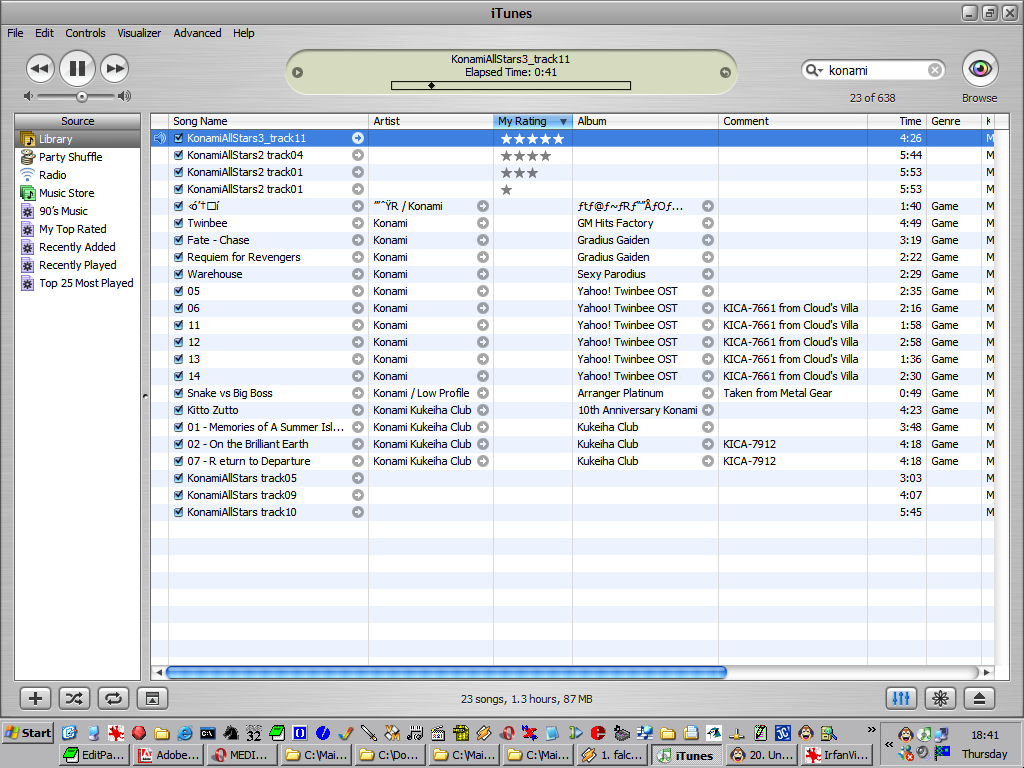 Playlists (in particular, the ability to cross-index the same song in multiple playlists) . I love the equitability in being able to play only the songs I haven't heard in a little
 while. I haven't yet fully explored podcasting, but what I have seen has been impressive. (I have listened to a few podcasts of NPR's Story of the Day.)
If any of you haven't tried iTunes, you should consider downloading it for your PC. It's free.
category: Music, Software
Tuesday, December 20, 2005
Mohandas -- before he became Mahatma (Museum Africa)
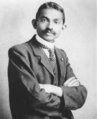 Mohandas before he became Mahatma
Museum Africa in Johannesburg, SA.
Had the opportunity to be in Johannesburg a few weeks back. Even though the cautionary tone of our guidebooks was very clear, there was one museum we didn't want to miss -- the one in Newtown called Museum Africa. (I was hoping to get a better understanding of South Africa, the run up to apartheid, and the creation of Soweto, the treason trials, and the making of Mandela.) But the exhibit that I most enjoyed turned out to be a very different one.
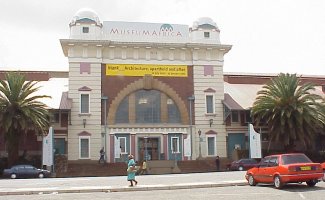
For some unknown reason, the museum has waived the seven Rand entrance fee these days, and still we pretty much had the museum to ourselves. I won't go into details about the exhibits about gold, Mandela, and the photo-essays, which you can read elsewhere on the Web. But I would definitely ask that anyone who visits Jo'burg not miss this museum.
What most resonated with me in the museum was the coverage that the museum has given to Gandhi. For over twenty years in Johannesburg, MKG was a practicing barrister representing Indian laborers who were indentured to work in the mines. The museum has a large area set up with photos, newspaper articles and artifacts from Mohandas' time in the city. It is claimed (by the museum and by others) that the foundations for many of the ideas that Gandhi became known for (ex. satyagraha) were laid in Johannesburg.
Everywhere in India, whether in Raj Ghat or elsewhere, I've only seen him as Gandhiji, as the Mahatma, one to be revered. Museum Africa provided a retro-glimpse into the life of Mohandas, before he became the "Mahatma" that the world came to know. His home and office in Rissik street, the two vegetarian places he often ate in, some of his scribbled letters and postcards are all documented for the interested visitor.
It becomes clear from the displays in the museum that Mohandas was only one of numerous Indians at the time in South Africa, resisting and fighting against the poor treatment of Indians at the hands of the British. They were mostly the leading members of the South Africa Indian Congress (SAIC). Gazing at the artifacts in the exhibit,
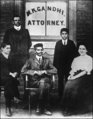 while also knowing that through the sheer force of his character it was Mohandas who emerged as the giant who took on the mighty British made for a fascinating experience.
It later occurred to me that I was pondering the bigger question of why some people succeed, while their colleagues are quickly forgotten.
Anyway, if you are ever in Johannesburg, don't miss visiting Museum Africa.
Cateory: Travel
Sunday, December 18, 2005
Abuelita -- Mexican Hot Chocolate Drink
 Here's something that I've been enjoying for well over a year, but I am not sure if a lot of others know about it, and hence the post.
I first had this rich chocolate-and-cinammon drink in the town of Oaxaca, in Mexico. That region produces caca0 and the night before, we'd seen the demonstrations of the mills in the little shops where they mixed and ground the cocoa with sticks of cinammon and sugar to create
 vats of the hot drink mix. The next morning, we stepped into a cafe and ordered a cup of hot chocolate instead of our usual coffee. It was a bit pricey (Starbuck's price) especially when contrasted with everything else in town being so very inexpensive. I'd loved the taste of the drink.
After returning to Chicago, in a Hispanic-owned store where we buy our fresh produce, I caught sight of the distictive yellow hexagonal box of Abuelita. It seemed like what I'd had in Oaxaca and I bought it to give it a try. I've been buying it ever since. The box contains six discs (tablets) and each disc is good for 3-4 cups of the drink, when dissolved in hot milk. The right way to make it is to put it all in a blender/mixer, but I find that a spoon works too. (The interesting thing is that these boxes must've been there in the store all these years, but only after that trip did I notice them and see how widely available they were.)
 When it's around 10 in the night and dinner has long been digested, but I am not yet ready for bed, and coffee seems too strong, I make myself a cup of Nestle's Abuelita. It's perfect to overcome the 10 p.m. slump. If you are a chocolate drink lover, you should give this product a try. Do leave a comment if you end up trying it. Does anyone know if the drink is available in India?
Category: Food
Saturday, December 17, 2005
GlobeTrekker: Most Enjoyed Travel Program on TV
 Just finished watching Globe Trekker's the 1 hour program on Egypt, and felt that posting here might mean that a few more people would learn about this great program that airs on PBS (if you are based in the U.S). You can also watch the episodes on DVD, which is what I did to view Egypt.
Highly recommended for both armchair travelers and airplane travelers. The premise for this program/travel video is this: One twenty-something traveler lands in a country and backpacks his or her way around to places of interest. The nice thing about these video programs is that the emphasis is on the experience rather than on the sights. This is certainly not your top 10 things to see in XYZ type of a travel program. (The theme music for GT is very catchy. Does anyone know where I could find an MP3 of that tune?)
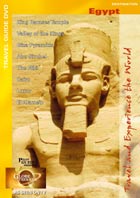
The unquestionable king of the GlobeTrekker hill is Ian Wright. (Any disagreements here from other GT fans?) Don't miss his quotes and his travel philosophy. This guy Ian is fearless and an absolute hoot. There are many other trekkers, quite watchable. The Egypt trip featured Megan McCormick. There is even an Indian (guessing she was born in the UK) -- Shilpa Mehta, and I quite enjoyed her Northern Spain travel video. PBS keeps messing around with the airtime of this program, otherwise I would surely watch every episode.
Check your local listing and try one episode. If you love travel, more likely than not, you'll love the program.
Category: Travel.
Friday, December 16, 2005
Frank McCourt's Tips On Writing
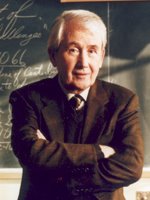
Towards the end of his very readable book Teacher Man, Frank McCourt has the following to say to his students in Creative Writing class. I thought I would share some excerpts here.

Listen. Are you listening? You’re not listening. I am talking to those of you in class who might be interested in writing.
Every moment of your life, you’re writing. Even in your dreams you’re writing. When you walk the halls in this school you meet various people and you write furiously in your head. There’s the principal. You have to make a decision, a greeting decision. Will you nod? Will you smile? Will you say, Good Morning, Mr. Baumel? or will you simply say, Hi? You see someone you dislike. Furious writing again in your head. Decision to be made. Turn your head away? Stare as you pass? Nod? Hiss a Hi? You see someone you like and you say, Hi, in a warm melting way, a Hi that conjures up a splash of oars, soaring violins, eyes shining in the moonlight. There are so many ways of say Hi. Hiss it, trill it, bark it, sing it, bellow it, laugh it, cough it. A simple stroll in the hallway calls for paragraphs, sentences in your head, decisions galore.
[…]
Dreaming, wishing, planning: it’s all writing, but the difference between you and the man on the street is that you are looking at it, friends, getting it set in your head, realizing the significance of the insignificant, getting it on paper. You might be in the throes of love or grief but you are ruthless in observation. You are your material. You are writers and one thing is certain: no matter what happens on Saturday night, or any other night, you’ll never be bored again. Never. Nothing human is alien to you. Hold you applause and pass up your homework.
Listen. Are you listening? You’re not listening. I am talking to those of you in class who might be interested in writing.
Every moment of your life, you’re writing. Even in your dreams you’re writing. When you walk the halls in this school you meet various people and you write furiously in your head. There’s the principal. You have to make a decision, a greeting decision. Will you nod? Will you smile? Will you say, Good Morning, Mr. Baumel? or will you simply say, Hi? You see someone you dislike. Furious writing again in your head. Decision to be made. Turn your head away? Stare as you pass? Nod? Hiss a Hi? You see someone you like and you say, Hi, in a warm melting way, a Hi that conjures up a splash of oars, soaring violins, eyes shining in the moonlight. There are so many ways of say Hi. Hiss it, trill it, bark it, sing it, bellow it, laugh it, cough it. A simple stroll in the hallway calls for paragraphs, sentences in your head, decisions galore.
[…]
Dreaming, wishing, planning: it’s all writing, but the difference between you and the man on the street is that you are looking at it, friends, getting it set in your head, realizing the significance of the insignificant, getting it on paper. You might be in the throes of love or grief but you are ruthless in observation. You are your material. You are writers and one thing is certain: no matter what happens on Saturday night, or any other night, you’ll never be bored again. Never. Nothing human is alien to you. Hold you applause and pass up your homework.
Wednesday, December 14, 2005
Getting a flat tire in Kruger National Park, SA
 The lady in the Nkuhlu picinic area was the one who got us excited. We were doing a self-drive safari in KrugerNational Park which is a mind-bogglingly large park (over 400 kms long), and so whenever we could we asked others about the animals they'd spotted. In the picnic area, the lady with the spiky blond hair said in her Germanic accent, "Yes, we saw many animals. We saw a Leo-paard." She then gave us exact directions to spot the leopard 8 kms north of Nkuhlu, but of course we never did spot her leopard.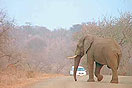
After taking a long detour to get some gas in the Skukuza camp, our car's tank and confidence restored, we took a side road, heading north towards the picnic area of Tshokwane, where our guidebook said the lions were.
It was a tar road in excellent condition, and we pretty much had the whole National Park to ourselves. Hardly anyone there at all, this being early December. We'd seen plenty of wildlife, and because of the big cats, the rule was to absolutely, positively never to get out of our vehicle. (Frommer's even had a graphic story of a seasoned ranger who got out to take a leak, and was killed by an animal before he could even zip up.)
With the windows open, I was driving at a slow pace, eyes scanning the branches of every passing tree hoping to catch sight of a leopard, the most elusive of the wildcats. And that's when I heard the flap-flap-flap. We knew what it was without even looking. We had a flat tire -- of all places, in a South African NP where the wild animals roamed.
I put on the flashers and we started to read the car's manual to see if the spare tire could somehow be fitted. (I was really scared of the animals and even considered driving the 20+ kms to civilization with the tire flat.)
In a minute, a car passed us, then reversed and the man (an American from his accent) asked if we'd called for help. "I don't have a cell phone," I said and neither did he. I told him that I was hoping to install the spare tire, and he offered to help. Given that we were in a no-getting-out zone, this was really a magnanimous offer. (I have since asked myself if I'd have offered to help if I came across a car with a flat tire in a game reserve.)
Just at that instant, a white truck drove up towards us from the opposite direction. "Good day," said the black man who was driving. "Do you have a spare tire?" I nodded yes. Without my even asking, the 3 occupants of the truck jumped down to help. All I had to do was remove our two suitcases from the boot so that they could get to the spare tire. They did everything else. These 3 worked with the efficiency of a race-car pit crew and they changed the tire in under three minutes, no exaggeration. It all happened so fast, I didn't even have time to register relief fully.
I gratefully started to shake the hands of the men. We were not sure if it was okay to offer them money. I took a currency note, folded it and tentatively handed it to the driver while shaking his hand. Thanks, thanks he said and they all drove off. From getting the flat tire to being back to driving took less than 10 minutes. I resolved to write this entry here to thank all these men who helped a stranger spontaneously. Also, this whole incident has now morphed into something that I quite enjoyed.
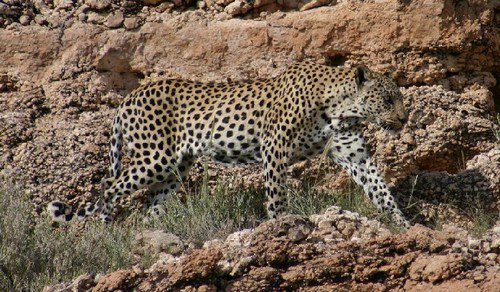
P.S. That same evening, as we were driving towards the Crocodile Bridge gate to leave Kruger NP, with our stay over, we did spot a leopard when it decided to cross the road right in front of our car.
Sunday, December 11, 2005
Frank McCourt's Teacher Man
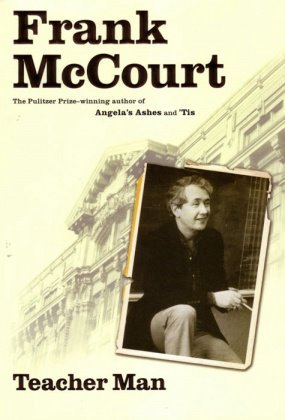 Most Enjoyed Book
Full Disclosure: I am a big fan of McCourt's, so this review (if this can be called a review) won't be very unbiased, I'm afraid. My big regret is that I missed attending his book signing when he was in Chicago recently.
Perhaps, you've read Angela's Ashes (or seen the movie). Angela's Ashes is what hooked me on to McCourt. When 'Tis came out, I eagerly read it. And now his third book, Teacher Man, is perhaps my most favorite one. (I should mention that I have noticed a tendency to give a higher score to things that are fresher in my memory.)
Teacher Man is all about Frank evolving into a great teacher over a 30+ year teaching stint. All the trademark McCourt touches that you might have noticed in 'Tis or Ashes are there -- his self-deprecation, the ever so slight ways in which he injects a moral or a lesson here and there, and his irreverent humor. This memoir is a series of vignettes of classroom events, written in his deceptively simple prose. Phyllis writing about Armstrong landing on the moon, while her father lay dying, the singing of recipes, Papa's Waltz are a few examples. Suffice to say that towards the end of the book, I was rationing how much I read, just in order to savor the book longer.
I found this CNN interview and this review by Powell's to be good reading.
If you haven't read any of McCourt's book, Teacher Man is as good a place to begin as any of the other two. The interesting thing is that I can't think of a segment of the population that will NOT like this book. Like I said, I am biased.
Subscribe to:
Posts (Atom)


