Ram Prasad's Most Enjoyed

An Ongoing Compilation of Most Enjoyed
Places, Books, Movies, Experiences, Activities, and Moments

May the whole world enjoy the pleasures that I have enjoyed -- (Thirukkural)

Sunday, October 01, 2006

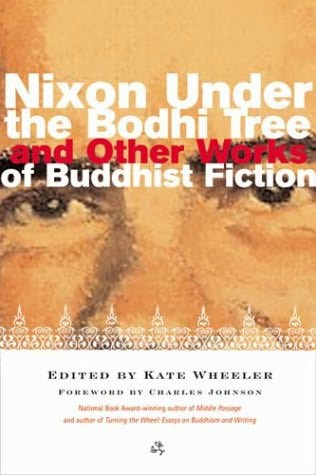
Nixon Under the Bodhi Tree - Buddhist Fiction

Nixon Under The Bodhi Tree
Edited by Kate Wheeler

One of those books that I picked up purely based on the Title. And am very glad I did for it proved to be a great collection of "Buddhist Fiction," a term I have not hear of before.

These stories/works would, I venture, appeal to a wide variety of people. You really don't have to be into Buddhism at all in order to enjoy the pieces compiled in here. I think I read the whole book simply because it was such a good read.

Notable stories: Beheadings, Greyhound Buddha, There are no footsteps in the sky, Mi Mi May.

Buddhist fiction, Kira Salak, Kate wheeler, Margo McLoughlin

Saturday, September 30, 2006

Niafunke - Ali Furka Toure - Most Enjoyed Music

Niafunke
Ali Furka Toure (1999)

I sometimes get nostalgic for places I haven't even been to. I listened to this album for the first time, read the CD liner notes, looked at the sepia-toned pictures and it happened again.

That was enough to make me want to hop on a flight to Bamako, (that'd be 3 flights from here really) then rent a Jeep and drive into the Mali shrubs looking for the village of Niafunke and this brick "studio." Instead, I listened to the wonderful music that Ali Furka produces.

Powerful, considering that this CD is my introduction to Toure's music, though I have heard his name and a song or two in NPR's Passport or similar programs. From the CD notes, I learned that Toure toured the West and then went back to his village to cultivate rice.

I loved the music and hope to learn to appreciate it more with repeated listenings. I admit that I am no music expert. When I listen to this collection, especially at the start of many songs, there are evocations reminiscent to me of Indian music (echoes of his Islamic influence perhaps). If you get a chance, do try this CD.

Ali Furka Toure, Niafunke

Wednesday, September 13, 2006

Slaughterhouse Five by Kurt Vonnegut

Slaughterhouse-Five
Kurt Vonnegut

After reading about Vonnegut for so many years, and dipping into essays by him, I finally decided to read one and picked this one.

Slaughterhouse-Five (S5) had made it to a few people's "one book to read list" so I decided that it was time. I think what surprised me the most was the sheer ease with which the book flows, the conversationality. I guess I had an unconscious image of having to plod through an 'anti-war' tome, but S5 is everything that a tome is not.

Vonnegut has used numerous literary devices to great effect, and writers may want to pay attention.

I especially liked his 'So it goes' chorus as I believe the literary device is called, the phrase follows almost every mention of death. It serves to underline the fact that death is such an integral part not only in war but also in daily life.

Been a long time fan of self-reference, and therefore I really enjoyed Vonnegut's 'meta-fiction.' He writes about this book in this book itself, writes about his trying to write it etc. (Vonnegut has done things which I mistakenly assumed that only Andy Kaufmann had tried in the movie 'Adaptation.')

Finally, I absolutely loved the way the author fragments a linear flow of time. All his seamless riffs on the present, past and the future and also to the planet Tralfamadore serve to create a great texture. (Again, I had mistakenly assumed that Tarantino's Pulp Fiction movie was the first to play with non-sequential narrative, but Kurt has done it a long time ago in this book.)

A word of caution: This book does contain harsh language, and I later found out that it has been on several 'banned books' lists. I understand that parents of young children may not want this book in their kids' hands, but I highly recommend it for everyone else.

Slaughterhouse fiveslaughterhouse funf,vonnegut, tralfamadore,meta-fiction, literary chorus


Saturday, September 09, 2006

Liar's Poker by Michael Lewis


Liar's Poker
Michael Lewis

Very few of us are going to actually get to be traders in Wall Street. And very few writers get to be insiders in a Bond trading firm and possess the ability to write as well as Mike Lewis can. Most important of all, the writer is not overly caught up in the self-importance that might have accompanied being a trader. These are just a few reasons to seek out this book.

I like Michael Lewis' books, and can especially recommend MoneyBall for those who like statistics and attempts to quantify subjective things (baseball, in this case).

Liar's Poker is a great read for anyone even remotely interested in life on the Street. With all the fanfare that accompanies anything to do with stocks, this book about what it was like for a bond trader, right from getting interviewed, to training to be a training, all the floor politics -- petty or otherwise -- and finally emerging as a full fledged trader make for fascinating reading.


bond trading, wall street, trader, michael lewis

Monday, July 24, 2006

A Book List -- the one that everyone should read


This blog is essentially a series of recommendations. When I came across a webpage chock-full of book recommendations, it made sense to me to pass it on.

What is truly embarrassing to me is how few of the books from the list I have read. But I guess that simply means that there is so much more for me to discover. To view the list and get started click right here.

one book,must read

Saturday, July 22, 2006

Mac vs PC Ads -- I'm a Mac, I'm a PC

Every time the Mac guy makes the PC-guy look klutzy on these TV ads, I find myself laughing out loud. This, in spite of the fact that I am firmly a PC user.

And after it was pointed out to me that the PC guy looks a little like Bill Gates, and the Mac dude is a youngish Steve Jobs lookalike, I've started to enjoy them even more.

There are 3 ads in all: Work vs Home, Out of the Box; and Touche. Check out all three here. (Needs quicktime)

PC vs Mac, Mac Ads, Steve Jobs

Monday, July 10, 2006

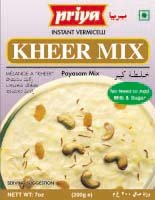
Priya Instant Mixes

If you have dabbled with Indian foods at all, or if you are an Indian who's spent any time outside of India, you've probably tried Gits instant mixes. You may or may not care for them, but you know of them.

One set of mixes which I hardly see mentioned are the Priya brand of mixes. They have a good deal of variety, and I can heartily recommed at least 3: The Kheer mix, Rava Dosa as well as the Upma. (In the US, these are now selling at Buy 2 @ $0.49 each and get a 3rd free, which is an incredibly bargain.)

The Upma packet is good for breakfast for 2, and the kheer (sweet pudding) is wonderful and should serve even 6. I've really enjoyed them these past few months, and I thought it is only fair that I mention it here.


instant mixes, kheer

Monday, June 26, 2006

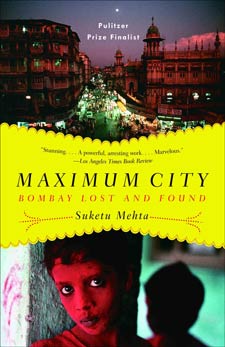
Suketu Mehta - Rebuttal in Wall Street Journal

Bombay Rude? Hard to Digest!
A Rebuttal in the Wall Street Journal By Suketu Mehta

I haven't read Mehta's "Maximum City" yet, but this is an oversight I hope to rectify rather soon. But this is about something else that Suketu wrote, and I enjoyed it enough to mention it here. In today's WSJ, I came across a cleverly constructed rebuttal by Mehta. Here's what happened:
A little while ago Reader's Digest conducted a survey of 35 cities for global courtesy. And unluckily for all those who love Mumbai, the city ended up at the bottom, as the least courteous. In response to that, Suketu, the lover of Bombay, goes on to say why that particular survey is a bogus one (they rated people on opening doors, saying Thanking you, and picking up dropped papers) and then proposes a second one instead, one that Bombay might easily win.

He then ends his rebuttal with an excerpt from his book that RD had itself run.
"If you are late for work in the morning in Bombay, and you reach the station as the train is leaving the platform, you can run up to the packed compartments and find many hands stretching out to grab you on board, unfolding outward from the train like petals. As you run alongside the train, you will be picked up and some tiny space will be made for your feet on the edge of the open doorway. The rest is up to you. You will probably have to hang on to the door frame with your fingertips, being careful not to lean out too far lest you get decapitated by a pole placed too close to the tracks. But consider what has happened. Your fellow passengers, already packed tighter than cattle are legally allowed to be, their shirts already drenched in sweat in the badly ventilated compartment. They know that your boss might yell at you or cut your pay if you miss the train.

And at that moment of contact, they do not know if the hand that is reaching for theirs belongs to a Hindu or Muslim or Christian or Brahmin or an Untouchable. Come on board, they say. We'll adjust."

Now that's called opening doors for others.

This is a diabolically clever note to end with when arguing for something, and Suketu uses it to maximum effect. I know I will be reading the book soon.


suketu mehta, maximum city, rudest citymumbai, WSJ, mumbai trains

Tuesday, June 20, 2006

One Day in September

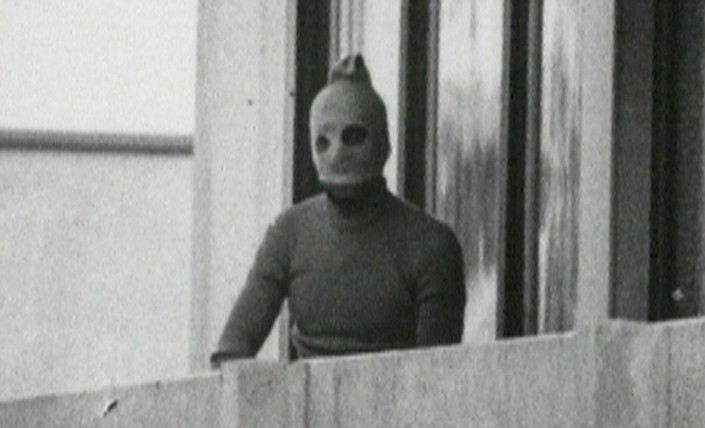
There is only one sure way to time-travel. Watch documentaries of yore. Just before settling down for the weekend to watch Speilberg's Munich, I brought along this documentary from the library. I knew that after watching Munich I would want to learn more about the real story behind the Israeli Olympic athletes.

I wasn't mistaken. This is definitely one to watch, especially if like most blog readers, you were too young to remember the actual incidents of 1972. Even if you do recall what you read at the time, this documentary covers the story from multiple points of view -- the Israelis, the PLO, some of the relatives of those lost, the US media, and even some the German policefolk invovled in the incident.

When seen through our post-Sep11 paranoic eyes, some of the mistakes of '72 seem astoundingly naive and dumb. But I guess we must remember that the world was indeed a gentler place at the time.

If a historical and 'true' portrayal of the Munich Olympics incident sounds interesting, don't miss this documentary. (This film won the Best Documentary academy award, and Michael Douglas provides some of the commentary.) Your library will most likely have a copy.

Munich 1972,Israeli athletes, PLO, Olympics incident

Sunday, June 18, 2006

The Zen Mind -- DVD

A Zen Journey Across Japan

Maybe you've already been to Japan. Or may be you plan to go there some day. Surely, your experience will be different from that of filmmaker Jon Braeley and that's just one reason to view this DVD.

If you are interested or even curious about Zen, then this DVD is a great way to get a peek into the world of Zen, with a very zen-focused tour of Japan thrown in. The DVD has interviews with Zen masters, and also gives the viewer an introduction to the Zen way of life and to meditation.


"But what is satori? Is it something extraordinary?
No, ...Satori means you turn into your true self"
from The Zen Mind

If you are very familiar with Zen, this documentary may be too basic for you, but it could still serve as great refresher. I've read a few books on Zen in the past, and that fact only helped me enjoy the documentary/film even more.

This movie seems to be difficult to get hold of. I couldn't find it listed in IMDB, and Amazon was out of copies, but if you can get it be sure to view it.

Zen mind, Jon Braeley, Emptymind films, satori, zazen

Saturday, June 17, 2006

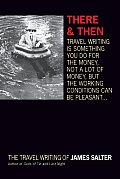
There and Then: A Book by James Salter


There & Then: The Travel Writings of James Salter
by James Salter

The trouble with most travel books is that they are 'linear' -- We went here, then we did that there, did you know this, something funny happened there (ha ha), what a great trip it was.

But never will Salter write that way. His love of the Old France, skiing, a little bit of Japan they are all there. James Salter writes with a certain muted brilliance, he doesn't give his praise easily. It has to be earned.

If you are already a fan of Salter, get hold of this book. He will take you to parts of the world that we can all go to, but we can't see with his sees. That's why we read his books.

If you haven't read Salter at all (and what's been stopping you?) then get his book 'Solo Faces' first. If fiction is not for you, read his autobiographical 'Burning the Days,' an excellent book about his flying and writing life.

Don't continue to be someone who hasn't read Salter. According to Susan Sontag:
"[Salter] is among the very few North American writers all of whose work I want to read, whose as yet unpublished books I wait for impatiently."


James Salter, There and Then, Travel writing

Sunday, June 11, 2006

Story-Wallah - Short Fiction from South Asian Writers

Shyam Selvadurai, Editor

I hadn't heard of or read about this anthology before. But I am very glad that the cover caught my eye. It is a very good collection of short stories from nearly two dozen writers.

The writers that you know well are there (Rushdie, Lahiri, Anita Desai, Rohinton Mistry etc.) but there are sure to be writers that you will discover.

I haven't yet had the opportunity to read a book by Bharati Mukherjee, and her wonderful story "The Management of Grief" has convinced me that I should hurry up. A few other stories that I particularly liked -- Winterscape (Desai), Just Between Indians (Ginu Kimani) and Auld Lang Syne (Sandip Roy). There are many more that I could add to the list.

If you hail from a South Asian country, you are sure to discover writers from your neighboring countries. And if you just happen to like reading stories from other cultures, this one is a nice and easy way into South Asia.

I also found this article about Shyam and the book, by Aparita Bhandari in mybindi.com


Story-wallah, Shyam Selvadurai, south asian fiction

Thursday, May 18, 2006

A "Personalized Countries" Visited Map

A friend sent me this link using Stumble Upon. If you've had the opportunity to visit a few countries, you can visit douweosinga.com and create your own map of countries that you have visited, such as the one shown below...


create your own visited countries map
or vertaling Duits Nederlands

It is pretty neat, and fun to play with. No denying the small risk of falling into the trap of simply counting the number of countries one has been to (touched) . It is one thing to have "visited" a country and quite another to have known or experienced it.

If this sounds like fun, try to create your own map. You can then save it, and it even gives you the html code to use elsewhere.

Tuesday, March 28, 2006

50 Best Websites

From The Chicago Tribune
(my hometown newspaper)

Surely, we've all heard of many of the 50, but there are always surprises. Check out the Trib's 50 Best Websites. (I came across the list in HyperText, a blog maintained by Steve Johnson.

Also, equally interesting (and a lot more opinionated) are the Readers' choices and suggestions. In this list, again, were many sites that I had not heard of, but I am sure planning to check them out. If you have the patience to read through the comments, you'll surely be rewarded with a site or two that you didn't know existed.

Saturday, March 18, 2006

Word Game of the Day

Merriam-Webster Word Game Of The Day

I have been a long time subscriber to the M-W word of the day, but only very recently did I notice the big button on the left panel. One day, out of curiousity, I clicked. That day's word game was fun and so I clicked again the next day. Soon, I became became a daily visitor and was looking forward to each day's game. They have lots of interactive word games of varying difficulty, all aimed to test our vocubulary and understanding of English words.

If words interest you, and you are not already a subscriber you should consider subscribing to the word of the day list. (It's free.)

And here's the Link to today's Merriam-Webster Game of the Day.

Vocabulary, word games

Thursday, March 09, 2006

Naked Economics -- Incentives Matter


Yes, a second post about the same book. Some things are worth repeating. (I already recommened this book here.) In this follow-up post, let me try and articulate what I liked about the book.

For years, I have been searching for a book that would explain Macroeconomics to me, and this turned out to be the book. I still have a lot more learning to do, but this book served as a much-needed foundation. Now, I have to build on some of the concepts in Naked Economics. (As an aside, I found that wikipedia has some very good articles of topics like inflation, deflation, the flow of currency etc.)

Back to Naked Economics. It was in Chapter 2 -- Incentives Matter -- that Charles Wheelan really reeled me in. This fascinating essay starts by exploring the perilous lives of Africa's black rhinos and theire prized noses. He makes his points through real examples of the factors that are at play in eco-tourism, takes detours to India (Hindustan Fertilizer Corporation) and also uses the pollution in Mexico city to explain to us how incentives work (or don't).
Programs, organizations and systems work better when they get the incentives right. It is like rowing downstream.
Of course, I think that everyone should read every chapter, but if you end up reading only one, let it be Chapter 2.

Wheelan, Incentives,economics

Wednesday, March 08, 2006

Kronos Quartet -- You've Stolen My Heart

KRONOS QUARTET and Asha Bhosle
You've Stolen My Heart
Songs from R.D. Burman's Bollywood

Sometimes, the buzz builds from very disparate sources, which was the case with this CD for me. I heard one song from this collection (Mehbooba, Mehbooba) in the same transatlantic flight in which I also heard Patchai Kiligal for the first time. (I've posted about that song before.) At the time, I didn't know of the existence of the Kronos Quartet.

Then, in one podcast episode of NPR's All Songs Considered I heard an interview with the Quartet in which playack singer Asha Bhosle was referred to as the "India's Elvis," and the Kronos Quartet person (perhaps
David Harrington) responded to the NPR interviewer by saying "imagine if you had the opportunity to introduce Elvis to the American public."

Finally, in my friend Jaideep's 2005 list (which you can find here) he'd also listed Churaliyaa as one of the best CDs of the year. So I got hold of the CD and have been enjoying these "old" songs anew. I am not a big fan of remixes, but am slowly changing my stance on that. (If a "re-interpretation" can lead to more enjoyment of a known song, I guess why not?)

I especially love the way the Kronos folks have churned out Mehbooba -- the playfulness of the instrumentation never fails to leave me pleasurably giddy. Lovers of classic Hindi hit numbers like Dum Maro Dum, Piya Tu Ab Tho Aaja and Chura Liya Hai will love this collection.

I know I did.

Kronos Quartet, Hindi film songs, R D Burman, Asha Bhosle


Sunday, March 05, 2006

Spellbound

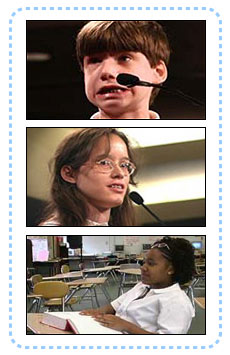
Spellbound: Everyone wants the last word (Documentary)

Saw this documentary after years of meaning to watch it. It didn't disappoint. If you like the whole idea of competitions (the preparation, the stress, your favorites getting knocked-out, and triumph) this is a movie you definitely want to see. (Don't read anything about the movie so that you can enjoy watching the results unfold.) This movie reminded me of "Mad Hot Ballroom" which I also recommend to all you competition buffs.

Keywords: Spelling Bee, competitions, preparation

Friday, March 03, 2006

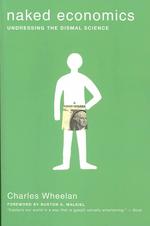
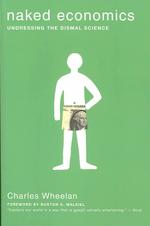
Naked Economics by Charles Wheelan

Undressing the dismal science

Once in five years, may be once in a decade, you stumble upon a book that is so good, it is pretty much the definitive word on a subject.

For me, Naked Economics by Charles Wheelan is one such book. For years, I have wanted to understand Macroeconomics better, and I believe me I have tried. And boy, does this one hit home. (I usually recommend to people that they first read a book and only then decide if they want to buy. But this one you should buy. And read once a year to refresh some of the concepts.)

A highly readable economics book with no graphs and no equations (even though I happen to like graphs and equations) can't go wrong, can it? Wheelan has a great breezy writing style, with such great everyday examples to drive his points home.

I will post once or twice more about some of the details of this book, but in the very last paragraph of the book, the author has captured it wonderfully.

“The remarkable thing about economics is that once you’ve been exposed to the big ideas, they begin to show up everywhere. The sad irony of Econ 101 is that students too often suffer through dull, esoteric lectures while economics is going on all around them. Economics offers insight into wealth, poverty, gender relations, the environment, discrimination, politics. How could that possibly not be interesting?”


Tags: Economics, charles wheelan, naked economics, macroeconomics

Saturday, February 18, 2006

Note To Sixth Grade Self

Heard this piece titled "Note to Sixth-grade Self" on our local NPR today, in a program called Re:sound.

While driving to a store, I flipped on the radio, and heard an audio rendition of Julie Orringer's "Note To Sixth Grade Self." I was mesmerized by the story of the social outcast, and her everyday struggles with her mean classmates. Even after reaching the store, I waited in the car in the parking lot until the reading ended.

Upon searching the Web, I learned that it had been published in The Paris Review. I liked the piece so much that I am now thinking of getting her book "How To Breathe Underwater."

If this link works, you can hear it in MP3.

Who links to me? Copyright 2006-2007 Ram Prasad